
A principal asks a simple question: what do we own, what is it worth and what needs our attention this month? In many family offices the answer takes days. A property schedule sits with one adviser; a trust deed with another. Investment statements arrive by email, while insurance renewals live in a calendar only one person remembers to check.
Wealth has grown more international and more varied. The operating system around it has often remained a patchwork. That gap is where the next chapter of family-office technology begins.
The next generation cannot steward what the current generation cannot clearly show them.
In an earlier edition of Bluxe Century, I spoke with Bobby Console-Verma about a new face of digital wealth. The magazine imagined equities, bank balances, real estate, art and the documents behind them visible together. It asked a question that still matters: will the next generation inherit a coherent picture, or a collection of disconnected files?
From a magazine vision to a working view
Console-Verma, founder and chief executive of 1fs Wealth, came to the problem through capital markets and private wealth. His career includes senior leadership at Credit Suisse First Boston and Nomura, building and exiting businesses, advising investment funds and family offices across jurisdictions, and co-founding Tower Gate Capital. His vantage point spans both the complexity of wealth and the systems meant to serve it.
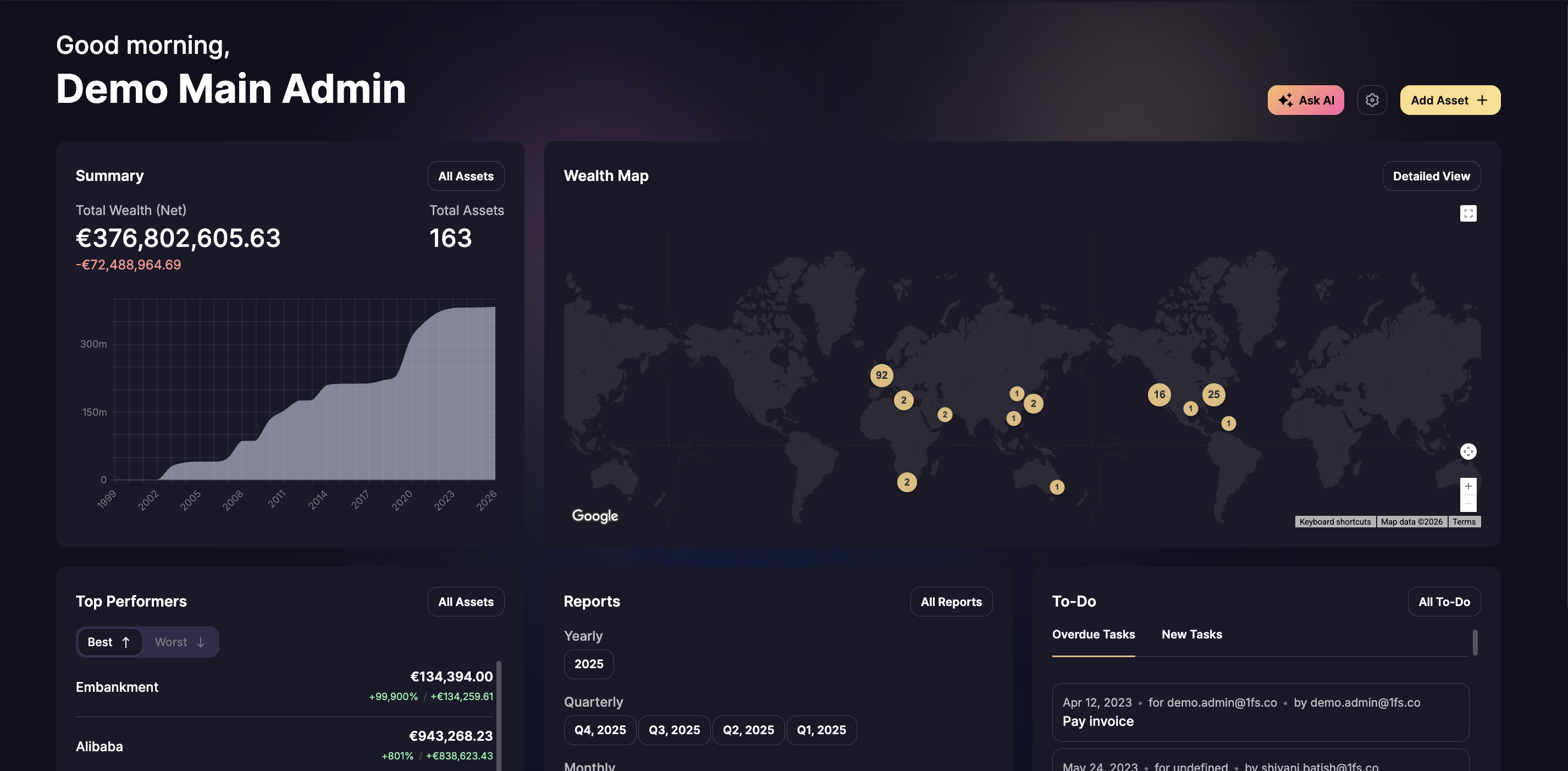
The earlier feature was full of ambition: an owner might one day see listed holdings, homes, collections and obligations in the same place. The current 1fs platform turns that broad ambition into a more practical proposition: a shared view of assets, entities, documents, contacts, performance and tasks, available across desktop and mobile. It is a foundation for better questions, not a substitute for the people who answer them.

The cost of searching
Fragmentation has a price beyond inconvenience. A filing date can pass unnoticed. A renewal can be negotiated too late. A board pack can consume a week of manual reconciliation and still leave directors unsure which number is current. When the person who knows where everything lives is away, institutional memory goes with them.
1fs groups its response around three gains. First, less time locating: an asset can sit alongside its entity, documents and relevant contacts. Second, fewer missed deadlines: tasks and reminders bring renewals and filings into view. Third, better decisions: portfolio reporting and performance can be examined with the underlying records close at hand. Those gains are most meaningful when the data is maintained and responsibilities are clear.
Succession is an information problem
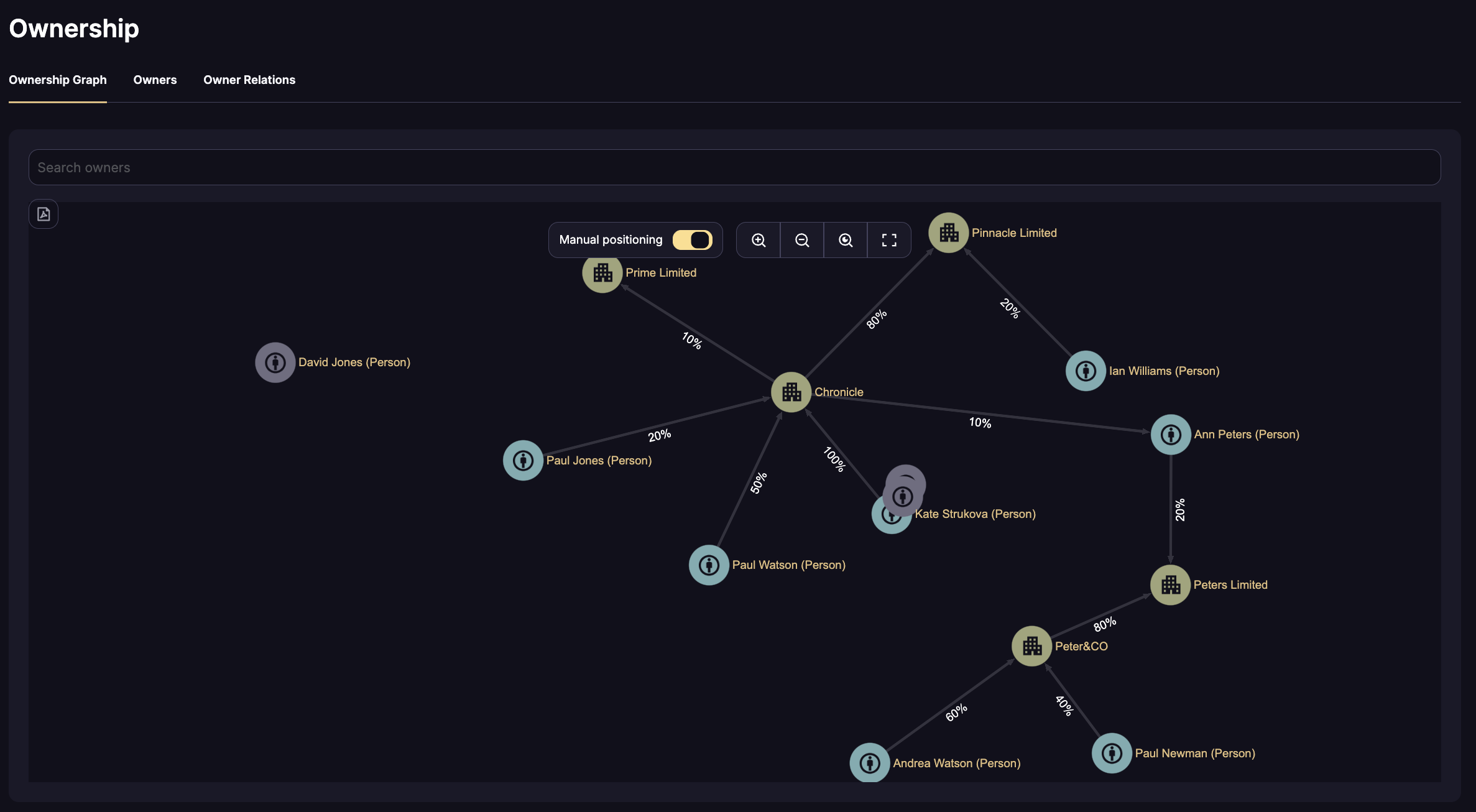
The transfer of wealth is also a transfer of context. A successor needs to understand which company owns a building, which adviser manages a holding, where a policy is stored and why a decision was made. A tidy valuation alone cannot answer those questions.
The 1fs approach brings assets, documents and insights into a single secure platform, with access shaped by role. Its product describes ownership charts, document links, reminders and reporting for individuals, single-family offices and multi-family offices. This can make the structure legible to the next generation while keeping appropriate boundaries between principals, family members, staff and advisers.
Intelligence needs a trustworthy record
Artificial intelligence will make private-office information easier to search and analyse. But useful answers require a dependable record underneath them. If ownership is unclear, documents are outdated or permissions are loose, faster answers can simply spread uncertainty faster.
A more intelligent office starts with disciplined data, named human owners and a clear route back to the source. A system can surface an expiring policy or assemble a report; a principal and trusted advisers still decide what the evidence means. Discretion, security and accountability are design requirements, not finishing touches.
The new measure of control
The private office of the future may look quieter than the technology behind it. Fewer requests to resend a document. Fewer deadlines discovered at the last moment. A successor who can understand the family enterprise without first decoding somebody else’s inbox.
Our earlier conversation with Console-Verma imagined a complete view of wealth. The next step is to make that view useful every day: ownership, performance and administration together, evidence at hand, and time returned to the judgement that only people can exercise. The most valuable innovation may be the simple ability to see the whole picture.